


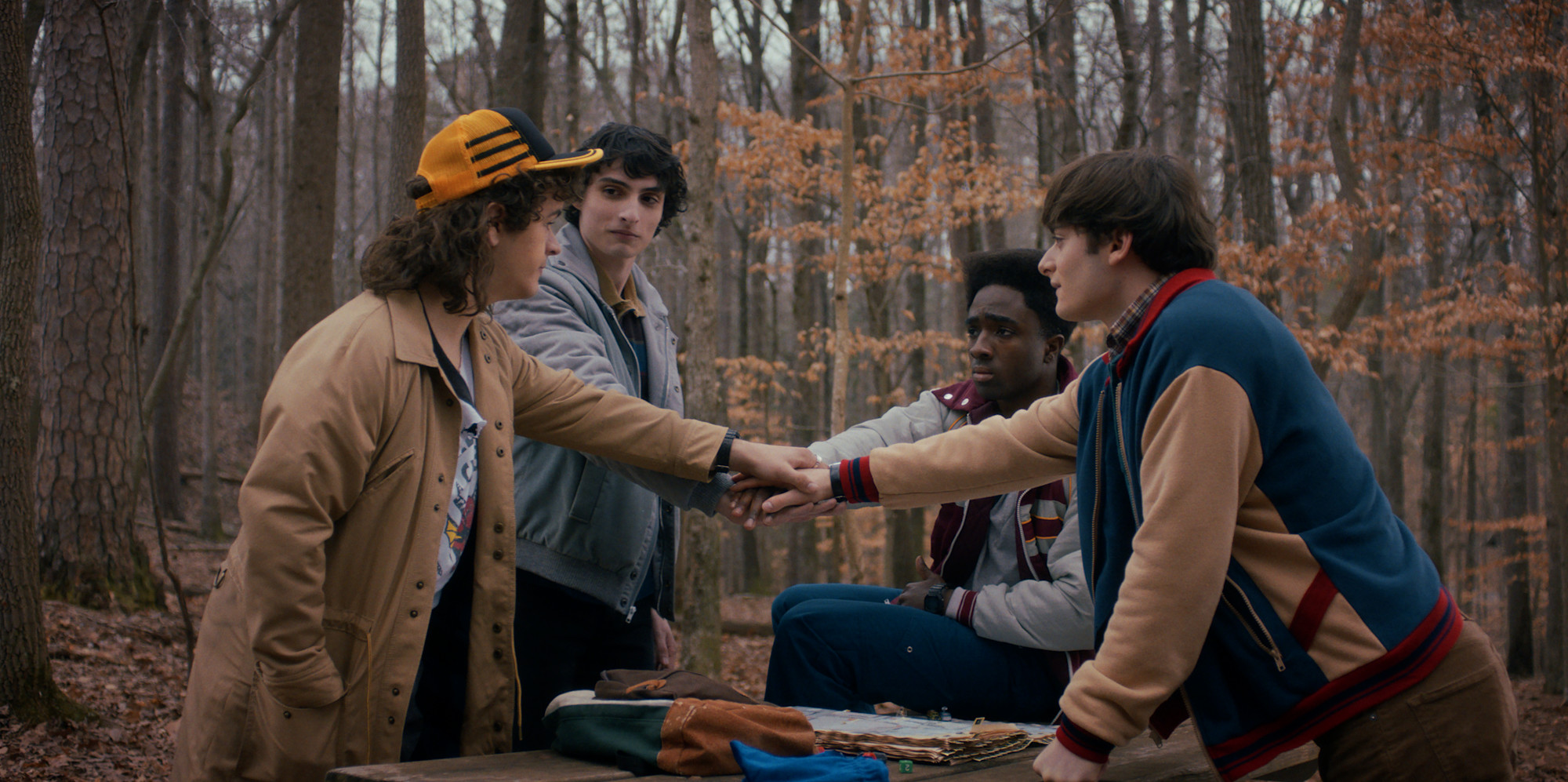
Stranger Things, the Netflix phenomenon that blended 1980s nostalgia with supernatural horror, has finally wrapped up its decade-long run with the release of Season 5’s finale on December 31, 2025.
Created by the Duffer Brothers, the series captivated audiences worldwide, turning a group of kids from Hawkins, Indiana, into global icons.
Table of Contents
As we bid farewell to the Upside Down, this article dives into the heart-pounding conclusion, traces the story backward from Season 5 to Season 1, explores character evolutions, highlights milestones, captures fan sentiments, and distills the show’s lasting lessons.
The Grand Finale: “The Rightside Up” – How It All Ended
The two-hour series finale, titled “The Rightside Up,” delivered a climactic showdown that tied up many loose ends while leaving some poignant ambiguities.
In a high-stakes battle, the Hawkins gang — now young adults — confronted Vecna (Jamie Campbell Bower) and the Mind Flayer in a merged realm where the Upside Down threatened to consume the real world.
The episode opened with the group devising a desperate plan to exploit Vecna’s weaknesses, revealed earlier in the season as tied to his human origins as Henry Creel.
Key moments included intense action sequences: Eleven (Millie Bobby Brown) channeling her powers to hold back the encroaching abyss, while Joyce Byers (Winona Ryder) wielded an axe in a visceral confrontation, ultimately decapitating Vecna to end his reign of terror.
The group faced setbacks, including the apparent sacrifice of Eleven, who mysteriously disappears after the battle, leaving her fate open-ended. Will Byers (Noah Schnapp) embraced his latent abilities, using them to dispatch Demogorgons and save his friends, marking a full-circle moment from his Season 1 abduction.
The episode closed on a bittersweet note: Hawkins rebuilt, relationships mended, but with lingering shadows. A controversial scene featured Will coming out as gay in a group monologue, which some praised for authenticity while others criticized as ill-timed amid the apocalypse.
Post-credits hints at potential spin-offs teased unresolved elements, like the Upside Down’s remnants. Directors, the Duffer Brothers described the finale as a “masterpiece” that wrecked even the cast emotionally, emphasizing its satisfying yet moving closure.
READ: How To Ruin Love Is Back! The Messiest Lobola Negotiations This December
Rewinding the Tape: A Season-by-Season Retrospective
Stranger Things unfolded like a Dungeons & Dragons campaign — full of twists, monsters, and heart. Starting from the end and working backward highlights how the story evolved from an intimate mystery to an epic multiverse saga.
Season 5 (2025): The Final Chapter
Dubbed the “endgame,” Season 5 ramped up the stakes with Vecna’s full invasion. Split into two volumes, it explored the Upside Down as a wormhole-like abyss. Themes of maturity dominated as the original kids navigated adulthood amid an apocalypse.
Will’s powers emerged fully, tied back to his Season 1 trauma, while Eleven grappled with her identity beyond her abilities. The season culminated in the gang’s united front, defeating Vecna but at great personal cost.
Season 4 (2022): The Vecna Curse
Set in 1986, this supersized season introduced Vecna as the series’ big bad, revealed as Henry Creel from Hawkins Lab.
The plot splintered into multiple threads: Eleven regaining powers in California, Hopper’s Russian prison escape, and a Hawkins curse killing teens.
It expanded the lore, showing the Upside Down’s origins, and delivered iconic moments like “Running Up That Hill” by Kate Bush becoming a cultural anthem.
Season 3 (2019): Summer of Spies and Malls
Shifting to lighter tones initially, Season 3 focused on summer romance and a new mall in Hawkins. The Mind Flayer possessed Billy Hargrove (Dacre Montgomery), leading to a fireworks-fueled finale at Starcourt Mall.
Russian spies and body horror amped up the Cold War paranoia, while character dynamics deepened — Eleven and Max’s friendship, Steve’s (Joe Keery) “mom” role.
Season 2 (2017): The Mind Flayer Emerges
Building on the Demogorgon threat, Season 2 introduced the Mind Flayer as an overarching entity. Will struggled with possession.
Eleven reunited with her “sister” Kali, and Bob Newby (Sean Astin) became a tragic hero. The Snow Ball dance provided emotional respite, emphasizing themes of family and belonging.
Season 1 (2016): The Vanishing of Will Byers
It all began on November 6, 1983, with Will’s disappearance after a D&D game. Mike (Finn Wolfhard), Dustin (Gaten Matarazzo), and Lucas (Caleb McLaughlin) discovered Eleven, a telekinetic girl who escaped from Hawkins Lab.
Joyce and Hopper (David Harbour) uncovered government conspiracies involving Dr. Brenner (Matthew Modine). The Demogorgon’s defeat set the supernatural tone, blending Spielberg-esque adventure with horror.
This backward lens reveals the show’s growth: from small-town mystery to world-ending spectacle, always rooted in friendship.
WATCH: How Uncle Waffles Became The Princess of Amapiano | PROFILED
Character Journeys: From Kids to Heroes
Stranger Things’ strength lies in its ensemble, with arcs that mirror real growth over nearly a decade. –
Eleven/Jane Hopper: Starting as a lab experiment, Eleven evolved from a mute survivor to an empowered young woman. Her journey involved reclaiming her humanity, forming bonds, and sacrificing for others—culminating in her ambiguous finale fate.
Will Byers: The series’ emotional core, Will, went from abducted victim to empowered psychic. His arc addressed trauma, identity, and queerness, ending with self-acceptance and heroism. Schnapp noted it felt “authentic” to his own experiences.
Mike Wheeler: The group’s leader matured from awkward tween to conflicted adult, navigating love triangles with Eleven and unspoken tensions with Will. His finale reinforced platonic bonds.
Joyce Byers: From frantic mom to axe-wielding warrior, Joyce’s redemption arc peaked in the finale, delivering Vecna’s death blow after seasons of sidelining.
Jim Hopper: The gruff chief transformed into a father figure, surviving Russia and reuniting with his “family.” His arc emphasized resilience and love.
Steve Harrington: Fan-favorite “hair” king shifted from bully to babysitter extraordinaire, embodying loyalty and growth. Supporting characters like Max (Sadie Sink), who overcame grief, and Nancy (Natalia Dyer), who became a fierce journalist, added depth. Sink praised the Duffers for “proper closure.”
Fan Reactions: A Divided Upside Down
The finale sparked polarized responses, echoing Game of Thrones’ backlash. On X (formerly Twitter), sentiments ranged from heartbreak to fury. Millie Bobby Brown’s post-finale photo, captioned “over and out” garnered emotional replies.
Fans praised the action and closures, with one calling it “one vera level series.” However, criticisms included rushed plotting, plot holes, and “woke” elements like Will’s coming-out scene, labeled “comically bad” by some.
Review bombing hit, with complaints about acting (e.g., Wolfhard’s performance) and ambiguity in love triangles. Positive voices, like Harry Sisson, called it “great,” urging against internet hate. Overall, the discourse highlighted the show’s deep emotional hold.
Key Takeaways: Lessons from Hawkins
Stranger Things leaves a legacy of themes that resonate beyond the screen: 1.
Friendship Endures: The core group’s bond overcame monsters and time, showing true friends as family.
Embrace Your Power: Characters like Eleven and Will learned self-acceptance, turning “weaknesses” into strengths.
Face the Unknown: The Upside Down symbolized fears — trauma, loss, identity — urging confrontation over avoidance.
Nostalgia with Purpose: 1980s vibes critiqued government secrecy and celebrated innocence amid chaos.
Growth is Messy: Arcs emphasized that happy endings aren’t perfect, mirroring real life. The show reminded us: “Friends don’t lie,” but stories evolve.
Conclusion: Over and Out, But Not Forgotten
Stranger Things ends as it began — mysterious, heartfelt, and unforgettable. While the finale divided fans, its impact on pop culture is undeniable. As Hawkins heals, so do we, carrying the echoes of Demogorgons and D&D. Whether spin-offs await or not, this campaign was legendary. Thank you, Duffers, for the ride.